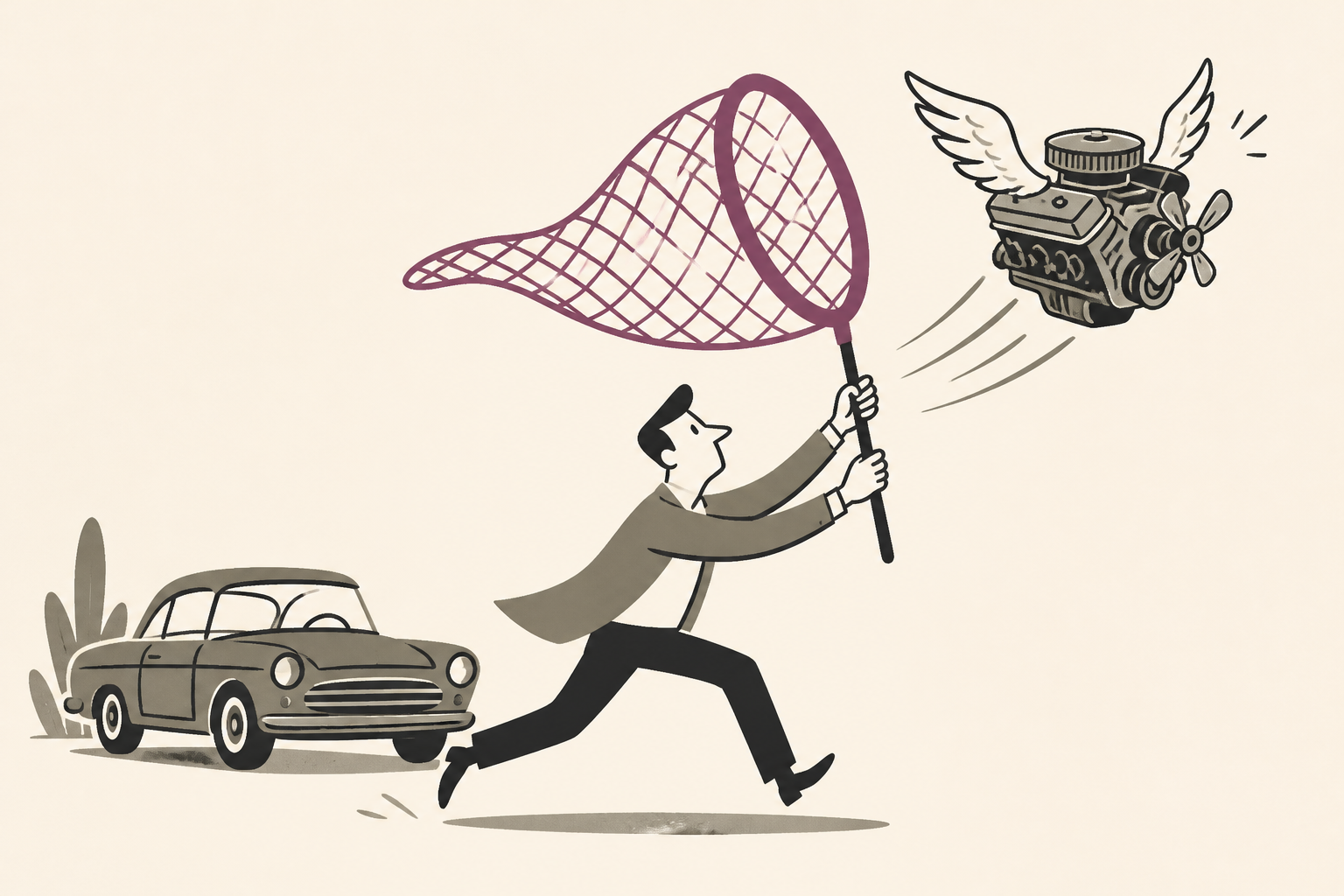
Your AI team is probably solving the wrong problem. Stanford researchers took the same model, changed only the code around it, and got six times better performance.
The idea
That surrounding code is called the harness: the custom logic controlling what your AI sees, when, and how. It holds your business rules and data, and it’s what makes your AI yours. Tuning it is slow, manual work, and it’s a big reason agents are easy to demo and hard to put into production.
Stanford’s Meta-Harness lets the AI read its own failure logs and rewrite its own scaffolding in a continuous loop. On competitive benchmarks it beat every hand-tuned solution, even when running a smaller, cheaper model.
Why it matters
- Stop over-indexing on model selection. The model is table stakes. Prompts and the system around it are the real differentiators.
- Most teams underinvest in the harness. It’s harder to see and measure than picking a shinier model.
- Manual tuning won’t last. AI will increasingly build and improve its own harness.
Follow the leverage
The edge isn’t in chasing the next model, and in 12 to 18 months it may not be in the harness either. The leaders who win stay educated and move with the leverage.
Are you one of those leaders?
Join the conversation: see the comments on LinkedIn.
Read the full transcript
hey, I’m Matt, and your AI team is probably solving the wrong problem.
Here’s a stat that stopped me in my tracks. Stanford researchers took the same AI model, changed nothing except the scaffolding, which is the code that your company develops, and got six times better performance. The same model. six times the performance!
So what is that scaffolding and why does it matter so much? researchers call it the harness. it’s the code that controls what information your AI sees, when it sees it, and how it’s presented. and tuning it has always been slow, expensive, manual work. In an AI solution, it is where your technical teams spend most of their time, developing this harness code. And it’s one of the main reasons AI agents are so easy to demo and so hard to put into production. Maybe you’ve probably lived through this. It’s pretty easy to create a compelling boardroom demo, but a very different effort to create an agent that works well in production.
Stanford just published something that changes that picture. they built a system called Meta-Harness and I linked to the paper in the comments below. The concept is almost elegantly simple. the AI reads its own failure logs. the level of how well it performed on every past attempt, every trace of what went wrong. and then it rewrites its own scaffolding, its code, to do better next time. it watches itself fail and then it fixes itself.
Put simply, the harness is the custom software your organization writes that makes your AI solution unique. it’s not the model, it’s your proprietary logic, your business rules, your data that you inject. it’s the thing that makes your AI implementation yours and not just a generic chatbot anyone can spin up.
what this research proved is that a fairly simple system can now rewrite that custom logic on its own, studying what worked and what failed, in a continuous loop that keeps getting better.
On competitive benchmarks Meta-Harness outperformed every hand-tuned solution human engineers had built. And this was true even when Meta-Harness was using a smaller, cheaper model.
So here are two things worth taking back to your team.
First, stop over-thinking on model selection. the model is table stakes. prompt quality and how you build the system around the AI model are your actual competitive differentiators. most teams are underinvesting in their solution surrounding AI models because it’s harder to see and harder to measure than just picking a shinier model.
Second, that manual tuning bottleneck keeping your agents stuck between prototype and production, will someday be a thing of the past. this research is early but the direction is clear, eventually the creation of these harnesses will be driven and continuously enhanced by AI.
So here is the real takeaway. the edge isn’t in chasing the next model. and in twelve to eighteen months it probably won’t be in the harness code either. the leaders who win are the ones who stay educated, follow where the leverage is moving, and get there first with their team and their solutions.
so my question to you is, are you one of those leaders?
Leave a Reply