Nearly every executive AI conversation I’m in arrives at the same destination: efficiency. Faster work, lower cost, better output. It’s the right goal. The mistake is expecting to skip straight to it.
The mess is the curriculum
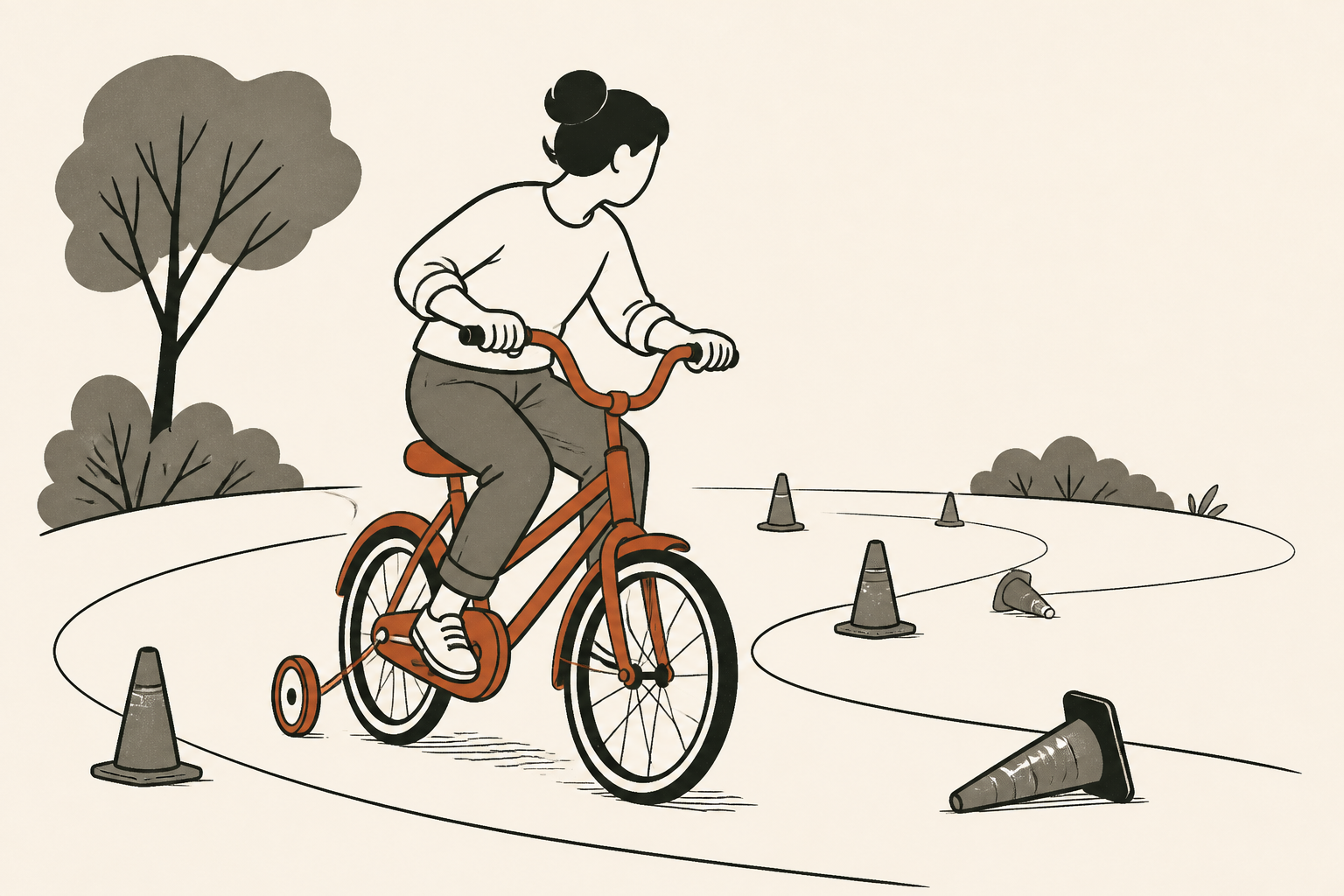
Early AI adoption looks wasteful on a spreadsheet. Prompts that don’t work. Tools that don’t fit. Small workflows that break. A week spent chasing an idea that goes nowhere. But that mess is how an organization learns when AI saves time, when it makes a mess, when it sounds right but is wrong, and when a person still needs to check.
You can’t optimize what your team doesn’t understand yet. Experiments teach. Systems scale. You need the first before the second works.
Maturity changes the question
In engineering organizations, I see a consistent progression. First, individuals use AI to speed up their own work. Then teams share practices. Then processes get redesigned around AI. Eventually, the way software gets delivered changes. At each stage, the definition of success changes too, from “make developers faster” to “should code review even look the same anymore?”
You can’t jump to stage three by mandate. You get there by learning your way through one and two.
How to give people room
- Protect exploration time. Some of the best learning comes from using AI with no specific goal: following curiosity and seeing where it goes.
- Train continuously, and train thinking. Tool training ages fast. Critical thinking, problem framing, and judgment don’t.
- Expect some experiments to fail. If none do, you’re not learning, you’re just repeating.
- Capture what you learn. Yesterday’s mess becomes tomorrow’s playbook only if someone writes it down.
The goal is efficiency. The path is learning. The companies that skip the path will spend years wondering why AI never changed how they actually work.
Leave a Reply